
Real GDP grew by a robust 3.4% in 3Q26, fueled by investment in computing equipment and private inventory building, as well as consumer spending and even an increase in government spending. The AI capital investment story continues to drive growth in the U.S. real economy as well as both the stock and bond markets. Exports declined in 3Q, as might be expected in a global tariff war; however, imports increased, which seems to run counter to expectations for tariffs. One explanation is that U.S. consumer and business demand for imports is relatively inelastic. Another is that there are few ready substitutions for the imported goods we favor in the U.S. As a result, the higher value of imports reflects higher prices paid due to imposed tariffs. A third, contradictory explanation is that consumer and business demand remains strong despite higher prices to drive import spending, adding to the story of a robustness without end within the U.S. economy.
What Are Indicators of the Economy Saying?
Economists (like this author) have given up referring to formerly time-tested rules of thumb for economic indicators and what their current readings mean for growth. As a community, capital markets forecasters have called for impending recession in each of the last four years. What good are indicators like an inverted yield curve or slowing job growth or rising inflation when they do not seem to lead to outcomes seen in past economic cycles? Has U.S. exceptionalism truly come to pass? Or are we, most likely, still dealing with the overhang of unprecedented monetary and fiscal stimulus during and after the pandemic? We might need a full decade to wring the excesses out of the global economy. Whatever economic model one believes, the current data does not seem to support formerly held beliefs.
Imports are a critical component of the National Income and Product Accounts, and politicians have long pointed to “net exports” as a key measure of our global economic fitness—are we selling more to the rest of the world than we are buying? In macroeconomic theory, net exports are a useful metric, but positive net exports are not necessarily a signal of virtue, they are just a summation of the current situation. We should also note that imports are not part of the current GDP calculation, as it only includes domestic economic activity, while imports describe economic activity that happens offshore. Higher imports can impact future GDP, as the purchase of a product made elsewhere implies a reduction in the purchase of the same product made in the U.S.
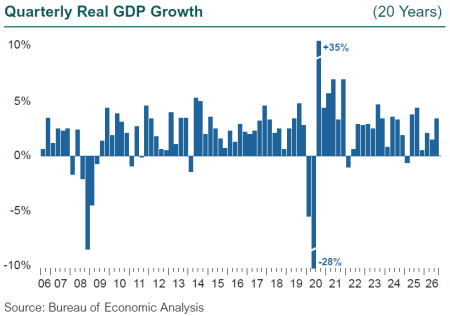
The challenge for the current tariff policy is that the intended re-onshoring of economic activity that should be encouraged by tariffs may take years to show up in the real U.S. economy. In contrast, higher prices for imported goods have a more immediate impact, and U.S. importers and purchasers of their goods and services are the ones that pay, not the exporters from the country of origin. We are raising our own prices, intentionally, to encourage domestic economic activity, and the U.S.-based production will still cost more than the pre-tariff imports.
The labor market data highlights the conundrum for the tea-leaf-reading macro economists. The labor market has trended steadily downward for 18 months, and the latest reading shows further signs of moderation. Nonfarm payrolls increased by just 29,000 in September. For the past 12 months, the job market averaged a monthly gain of 45,000, well below the 117,000 average notched during the prior decade. My now-obsolete rule of thumb used to be the U.S. economy needed job growth in the 100,000 range or above to be considered expansionary. Anything this close to zero meant the recession red lights are flashing. However, the unemployment rate is holding steady, inching up to 4.2% from 4.1% even as more workers entered the labor force. Despite slower hiring, layoffs remained limited, evidenced by initial unemployment claims falling to 197,000, near a multi-decade low. Our new macro catchphrase: we are in a “low hire, low fire” environment.
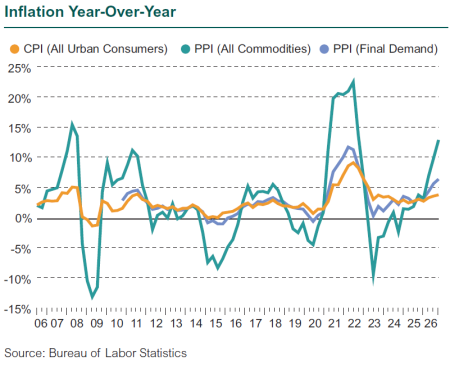
The Federal Reserve uses interest rates to fight inflation and to spur the economy after a downturn. The Fed has control over one rate—the inter-bank lending rate known as the Fed Funds Rate—but its real influence stems from the confidence the market has in interpreting the intended direction of the full yield curve and the goals of Fed policy. If that confidence wanes, so goes the power of the Fed to influence market behavior, consumers, and thereby inflation. The Treasury secretary and the Fed chair argued for caution in raising rates, but the bond market ultimately forced investors to reconsider exactly who was setting the odds. The 10-year Treasury yield rose during 3Q to levels not seen in over two decades as investors confronted a combination of renewed inflation pressures, resilient economic growth tied to the AI buildout, and mounting fiscal concerns.
What will upset this remarkably resilient economic apple cart? It seems like we have tried everything over the past two years: higher for longer interest rates; constantly shifting tariffs; the attack on Iran and a sharply disrupted global petroleum supply chain, leading to spiking oil prices; persistent inflation; and political division seemingly everywhere. With all that, we can’t seem to tip over the cart.
Disclosures
The Callan Institute (the “Institute”) is, and will be, the sole owner and copyright holder of all material prepared or developed by the Institute. No party has the right to reproduce, revise, resell, disseminate externally, disseminate to any affiliate firms, or post on internal websites any part of any material prepared or developed by the Institute, without the Institute’s permission. Institute clients only have the right to utilize such material internally in their business.